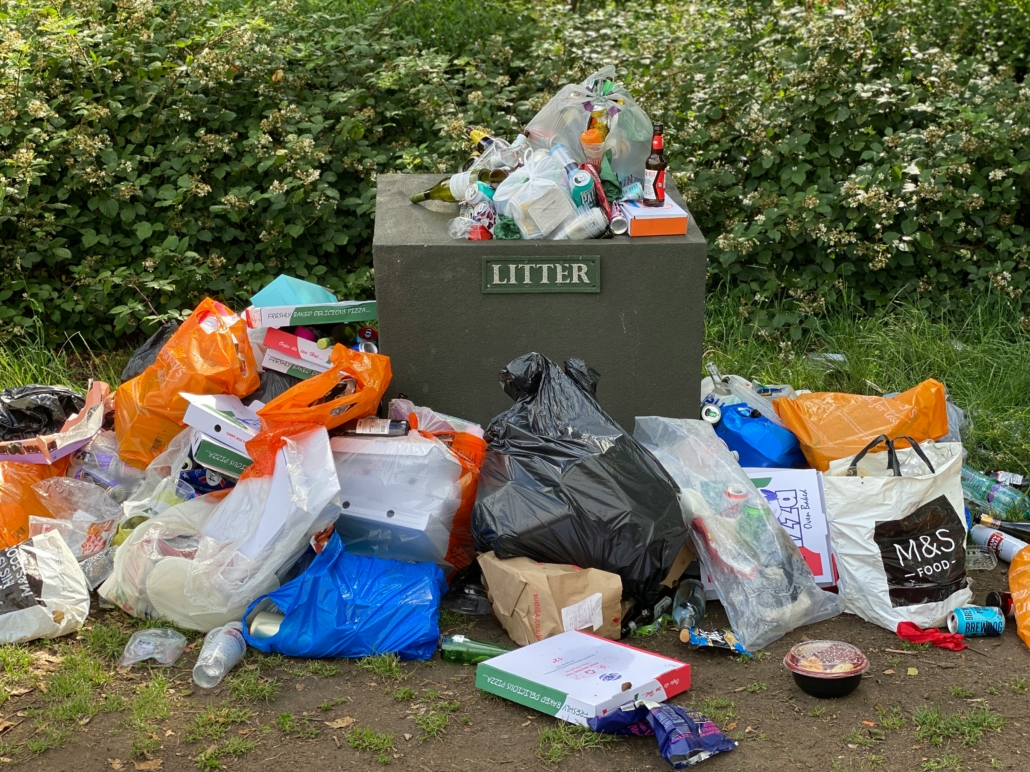
Any rubbish (such as sweet wrappers or drinks bottles) that is not put in the bin is litter. Most litter in Britain is dropped from cars. Fast food packaging is a problem as it is dropped from cars in lay-bys after people have eaten their lunch or snack. Litter dropped on roads or verges can be washed into rivers and then out to sea. Other forms of plastic pollution such as bio-beads and nurdles can escape from plastic factories, water filtering systems, or are lost when transported between places. Read more about bio-beads here and nurdles here.
Every year at least 8 million tonnes of plastic enters our ocean – that’s the equivalent of two bin lorries full every minute! Most ocean litter (80%) ends up in the sea after being washed downstream in rivers. A lot of litter (over 50%) comes from just five countries in South and East Asia; China, India, Indonesia, Malaysia and the Philippines.
Tons of litter ends up on beaches around the Pacific and Indian Oceans every day.
The ocean currents (or gyres) move the litter around until it ends up as massive “plastic islands” taking up vast areas of the sea. No one really knows how big these islands are because the plastic is difficult to see from satellites and some may just be a lot of tiny pieces of plastics, like pepper in a soup. Some estimates put it at around 80,000 tonnes for the largest ones!