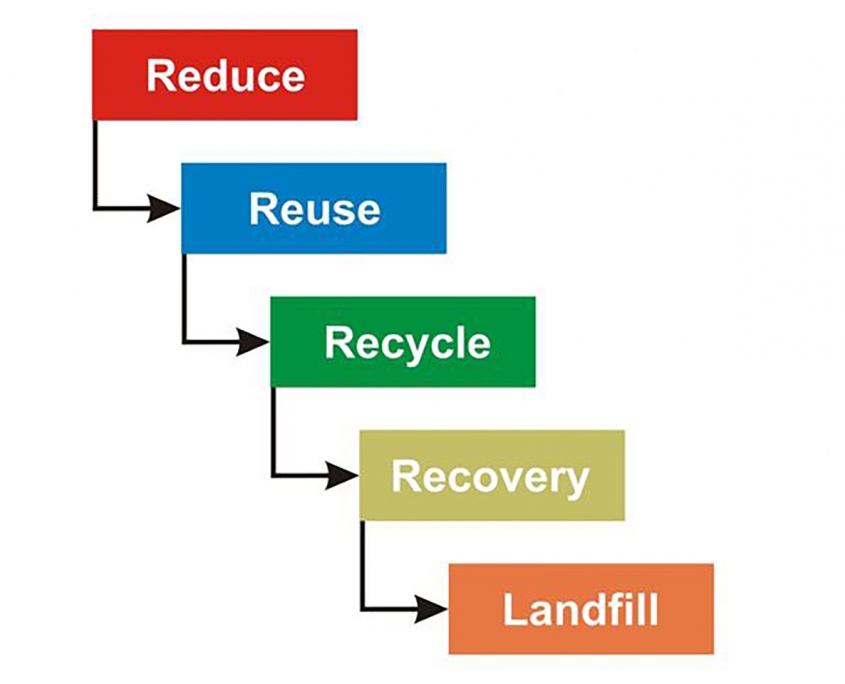
The 3Rs (Reduce, Reuse and Recycle) are part of the Waste Hierarchy. This is a list of how to get rid of waste, in order of importance, considering which is best for the planet. Reduce comes top, followed by Reuse then Recycle. Recover comes after that, with Landfill as the worst thing to do with our waste.
3Rs
Reducing the amount of waste we make is considered the most important of the 3R’s. Reducing means making less waste in the first place. For example not buying or using things we do not need.
The diagram below shows all the ways we can deal with waste, reducing being the best, landfill being the worst. Hover over the hotspots to read more about each one.
1
2
3
4
5
6
7
1
Reduce
Lowering the amount of waste produced by using fewer things.
2
Reuse
Using items again and again before replacing them, perhaps in different ways to their original purpose.
3
Recycle
Using as much of the material that would otherwise be going to waste to make new products.
4
Recovery
Recovering the energy that is left in waste to generate power.
5
Landfill
Safe disposal of waste to landfill where it is buried in the ground.
6
Best
Reducing is the most favoured option
7
Worst
Landfill is the least favoured option.
Examples of how you can help reduce waste:
Be a Savvy Shopper
- Help grown ups remember to take reusable bags when you go to the supermarket. This reduces the amount of plastic bags being used and thrown away.
- Buy only what you need (don’t get sucked into buy one get one free if you’re not going to use it!)
- Try to buy items with little or no packaging. Food that’s produced locally often has little plastic packaging and won’t have travelled very far.
Look after your belongings
- By looking after your clothes and toys they will last longer, this means you won’t need to throw away as many broken toys or spoilt clothes! One way to protect your clothes is to wear an apron when you are painting.
- Repairing things when they get broken, like sewing a hole on your jeans or gluing a broken toy, also reduces waste.
Stop using plastic bottles and straws
- Instead of using a straw, drink from the cup, then the straw won’t need to be thrown away! Reducing the amount of waste.
- In the UK we are very lucky that our tap water is drinkable. Instead of drinking water from plastic bottles, get a reusable bottle and drink water from the tap. This reduces the amount of plastic bottles that get used and put in the bin!
Only take what you need
- At a party, if you have sticky fingers from eating cake, instead of taking a handful of paper napkins, just take one! This means less will go to waste.
- If you are in the canteen and you’d like some sauce sachets, take only one portion. Otherwise you end up throwing away sachets that haven’t even been used. What a waste!
Think about food waste
- By eating all your packed lunch or school dinner, you reduce the amount of food that gets thrown away. That food has taken a lot of resources to make, whether water, land or transport – don’t waste it!
- If you’re at a restaurant or a party, try not to take more food than you can eat.
 Teachers
For information on how you can reduce waste at your school, check out this How to Reduce at school guide.
How to use a paper towel
Click here to hear a TedTalk on how to help reduce the number of paper towels being used.
Reusing the products we already have helps to reduce waste. Reusing means to use something over and over again, like a water bottle, or to find a new use for something that can no longer fulfill its original use. It is the second best of the 3R’s (after Reducing) and it is really easy to do! Click here to find out more about reuse and repair activities near you!
Here are some examples of how you can reuse:
Crafts
- When you are doing a drawing you can use the back of a piece of paper that has already been used. And if you are printing, make sure its on both sides of the paper too!
- Whilst you are being creative, why not reuse some of the items that were going to go in the recycling for your next masterpiece. How about a toilet roll rocket ship?
Avoid using disposable items
- Some things are made for one time use only, like plastic bags and bottled water. But there are alternatives that are better for our environment as you can use them again and again. Remember to take a reusable bag with you when you go shopping and always carry a reusable water bottle.
Don’t Bin it straight away
- Instead of throwing things you don’t want any more in the bin, you could give them to a friend that does want them, or put them in a charity shop.
- If you have used a straw, instead of throwing it away after one use, you could wash it up with a pipe cleaner and use it again! Alternatively, but a reusable straw.
- Instead of throwing broken things away and getting new ones, you could have a go at fixing them! There is likely a Repair Cafe in your area which people would love to help fix your things for free – everything from games consoles to ripped jeans.
Visit a Scrapstore or Charity Shop
- One person’s trash is another person’s treasure. Why not visit a Scrapstore to see what gems you can buy, this reuses items and saves you money! Everything from fabric, craft paper and everything in-between, Scrapstores have all sorts.
- Charity shops are also amazing places – new books, games, clothes, toys that can be reused.
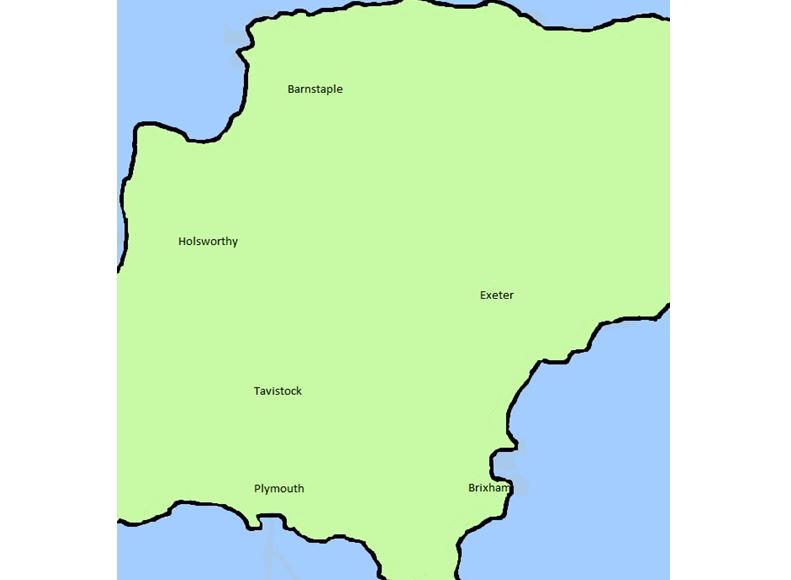
See the map below to find out where your closest Scrapstore is:
1
2
3
4
5
1
South Molton Scrapstore
A community resource to keep materials out of landfill and provide a safe, inclusive space for creativity to flourish. During this time of social isolation we will do our utmost to provide packs to support emotional wellbeing through creativity.
2
Holsworthy Family Workshop (HFWRC)
A veritable Aladdin’s Cave, full of interesting, locally-sourced scrap materials. It is an invaluable environmental project, sourcing waste things, then giving you the opportunity to turn them into playthings.
Manor Offices, North Rd, Holsworthy EX22 6DJ
01409 254272
3
Exeter Scrapstore
Running since 1985 the scrapstore accepts unwanted materials from local businesses and organisations and turns them into valuable resources for play, artistic and creative purposes. For the cost of a nominal annual fee and a small charge per basket or bag of scrap you will be able to receive the amazing benefits that the Scrapstore has to offer.
Belmont Park, Gordon Rd, Exeter EX1 2DH
01392 661769
4
Tavistock Community Scrapstore
Membership £5 for individuals/ £10 for groups. A donation of £1 is requested per bag. The scrapstore is full of exciting and interesting items that people can use for art and creativity. There is also a small craft shop for customers to buy various artists’ equipment. Laminating and photocopying is also available.
The Quay, Plymouth Rd, Tavistock PL19 8AB
07745 943413
5
Plymouth Play Association
Is a not for profit membership association which provides a range of services for people of all ages and interests – it’s not just for the kids! People pay an annual membership fee, and then pay a just a little each time they collect some scrap.
Union St, Plymouth PL1 3HB
01752 256633
Teachers
For information on how you can reduce waste at your school, check out this How to Reuse at school guide.
Also pass on our top tips to parents on how to reuse and extend the life of school uniform, here.
Recycling is when products that can’t be reused go through a process that converts them into something new! This is better than throwing them in the bin as the material they are made from is used again. Recycling is not as good as Reusing because it requires energy and resources to collect, sort and process the unwanted items.
Information on what you can recycle:
Where else can you recycle?
Most households in Devon have some sort of recycling collection so if you don’t already do so, ask for a leaflet from your local council or look on their websites so you can join in. There are lots of other places to recycle too, here are some suggestions.
District Council household rubbish and recycling collection guides
Many people get confused about what can be recycled in their area. These quick reference guides are handy for showing ‘what goes where’ in your local council household waste collections.
They can be used in class or sent home for further discussions, but remember it is more important to Reduce and Reuse your waste first!
Exeter City Council Collections.pdf
Mid Devon District Council Collections.pdf
West Devon Borough Council.pdf
Teignbridge District Council.pdf
South Hams District Council.pdf
Teachers
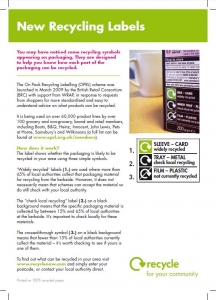
This document will help explain some of the different recycling labels that exist on the things we buy.
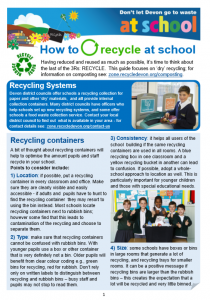
For information on how you can recycle waste at your school, check out this ‘How to Recycle at school‘ guide.
Discover more at
