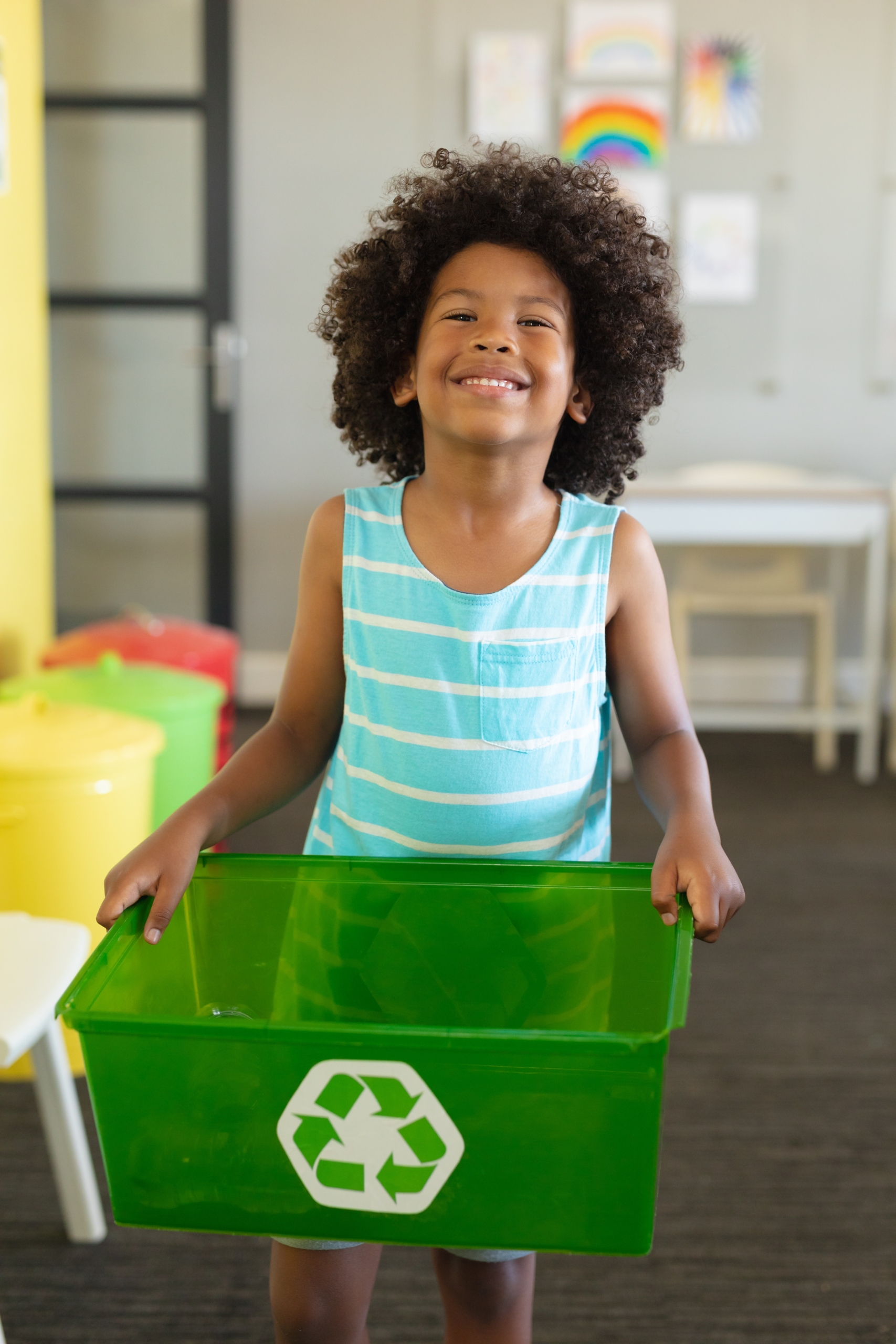
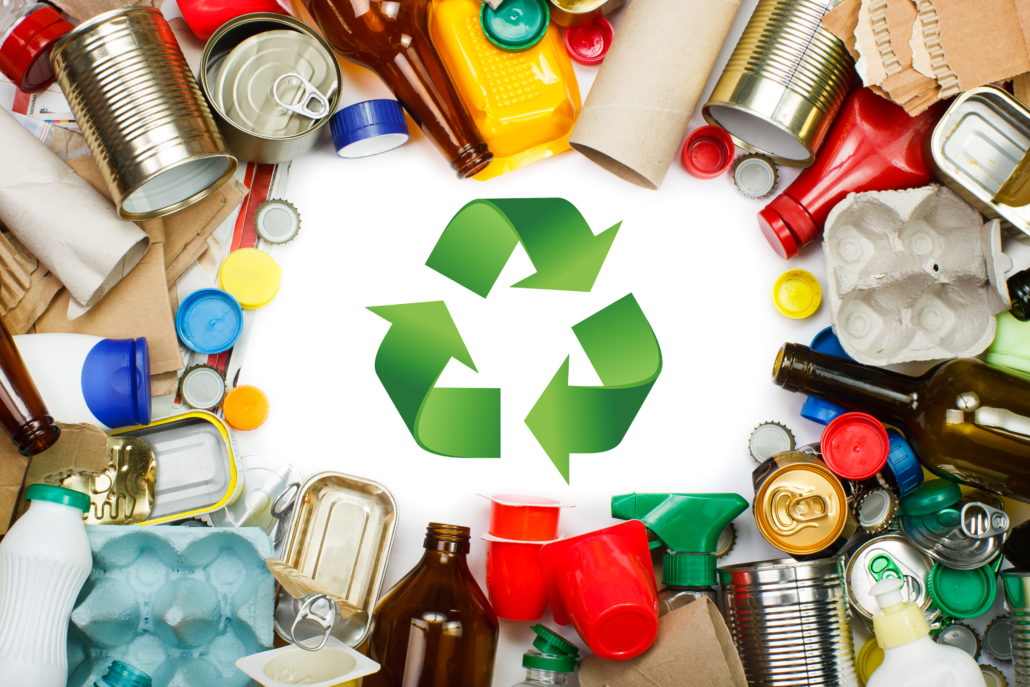
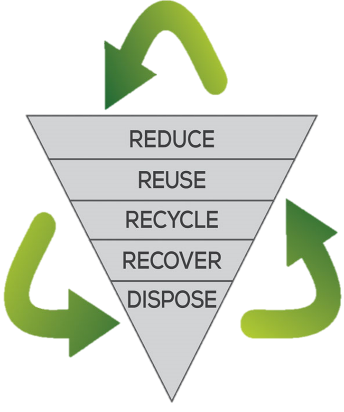
Having reduced and reused as much as possible, it’s time to think about the last of the 3Rs: RECYCLE.  This guide focuses on ‘dry’ recycling.

Devon’s District Councils offer schools a recycling collection for  paper and other ‘dry’ materials,  and all provide internal collection containers. Many district councils have officers who help schools set up new recycling systems, and some offer schools a food waste collection service. Contact your local district council to find out what is available in your area – for contact details see: zone.recycledevon.org/contact-us

Our hints and tips below should help your school make the most of recycling collections.

Take a look at our resources available to help your school recycle as much as possible.

1. Do a Waste Audit

People often ask what the best thing they can do to reduce waste at school. Our reply is usually:

“Do a Waste Audit”

A Waste Audit is a brilliant way of finding out how much rubbish your school creates and what type of things you, pupils and staff are throwing in the bin. This can then help you to organise better rubbish collections for your school, and work out what type of recycling bins will work best in your classrooms, playgrounds, school grounds and staff rooms.

Here are instructions that will help you carry out your own waste audit at school:

Children sorting recycling

2. Choose the right recycling bins

Recycling containers

A bit of thought about recycling containers will help to optimise the amount pupils and staff  recycle in your school.

Points to consider include:

1) Location: if possible, put a recycling     container in every classroom and office. Make sure they are clearly visible and easily accessible – if adults and  pupils have to hunt to find the recycling container  they may resort to    using the bin instead. Most schools locate    recycling containers next to rubbish bins;   however some find that this leads to contamination of the recycling and choose to separate them.

2) Type: make sure that recycling containers cannot be confused with rubbish bins. With younger pupils use a box or other container that is very definitely not a bin. Older pupils will benefit from clear colour coding e.g., green bins for recycling, red for rubbish. Don’t rely  only on written labels to distinguish between recycling and rubbish bins – busy staff and pupils may not stop to read them.

3) Consistency: it helps all users of the school  building if the same recycling    containers are used in all rooms. A blue recycling box in one classroom and a yellow recycling bucket in another can lead to confusion. If possible, adopt a whole-school approach to location as well. This is particularly important for younger children and those with special educational needs.

4) Size: some schools have boxes or bins in large rooms that generate a lot of recycling, and recycling trays for smaller rooms. It can be a positive message if    recycling bins are larger than the rubbish bins – this creates the expectation that a lot will be recycled and very little binned.
3 brightly coloured Recycling bins in a row hanging on a fence

3. Label the bins well

Clear labelling for recycling containers is essential. Don’t rely on people knowing what can be recycled at school, even if your      recycling system is similar to that of nearby homes. Ask pupils to design their own labels, perhaps holding a competition for the best design to promote ownership of the collection scheme.

WRAP also have downloadable labels to stick to school bins: http://partners.wrap.org.uk/collections/105/

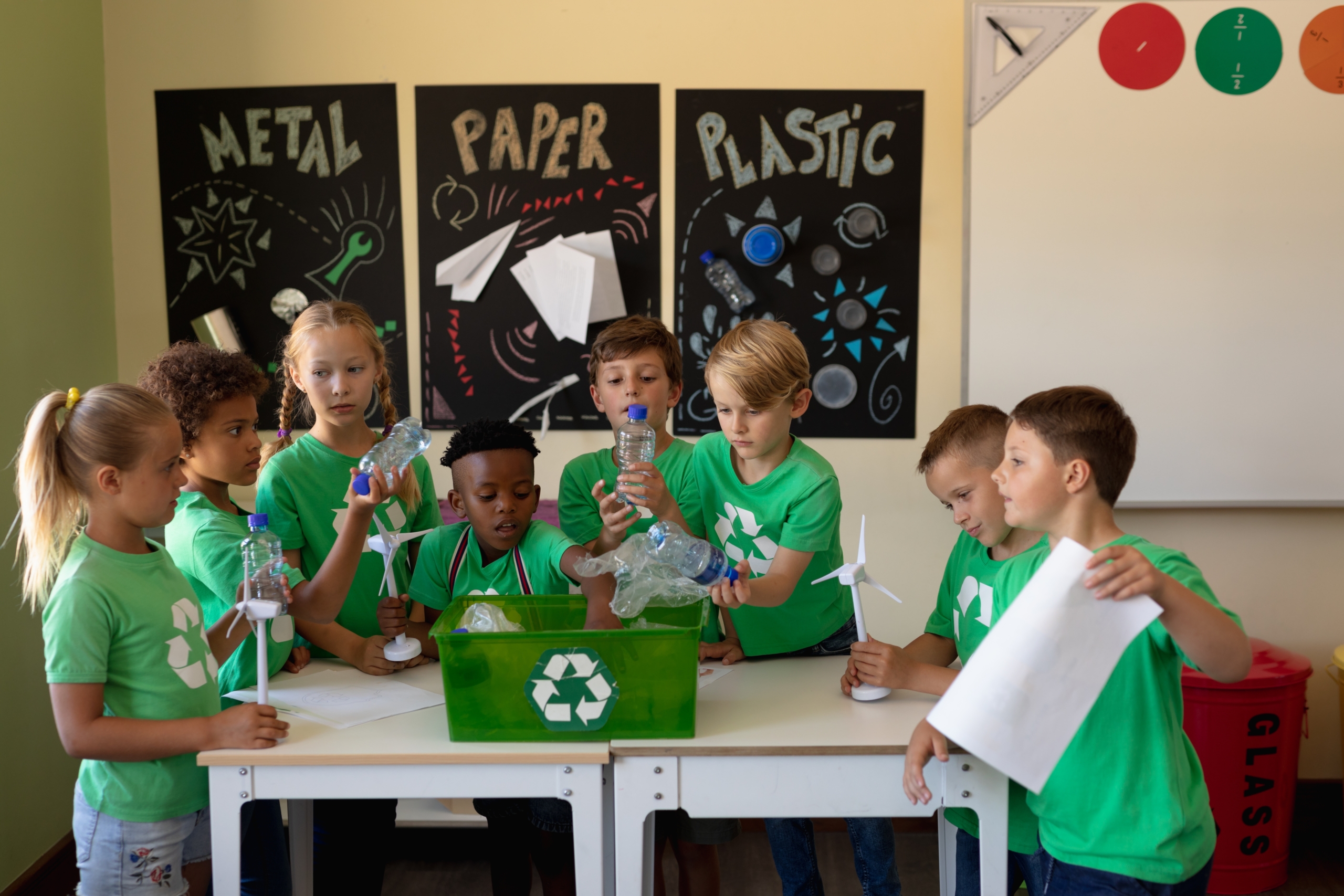
5 children around a bin filled with household rubbish holding signs that have different materials written on them.

4. Involve pupils in recycling

If possible, involve pupils in collecting the recycling from around the school and taking it to a central location, ready to be put out for the collection crew.

Some schools have a recycling monitor in each class / tutor group, while others have a recycling team or give this responsibility to the Eco Committee. Ensure to discuss health and safety with the pupils.

Bin Checks

Pupil monitors can do regular visual checks of the rubbish bins to ensure they do not contain          materials that should be recycled.

A weekly/monthly check, with feedback of the results to the rest of the school (e.g., in assembly on a noticeboard) will be a useful reminder of the importance of recycling the correct materials.

5. Assemblies and Competitions

Even in schools where recycling is firmly embedded in daily life, it is still important to use assemblies and whole-school competitions to keep the profile of waste issues high. Younger pupils who start school and readily adopt the good recycling habits expected of them, may not know why recycling is important to preserve our natural resources. As pupils get older they will be able to        understand more complex issues, such as resource depletion and how the energy saved by recycling helps to reduce our carbon footprint to combat climate change.

Access our workshops to help educate the whole school.

Ask classes who attend our school trips to do an assembly.

Get the Eco Team to do an assembly for the whole school.

Take part in our waste and recycling competitions.

Zone © 2026 Recycle Devon